

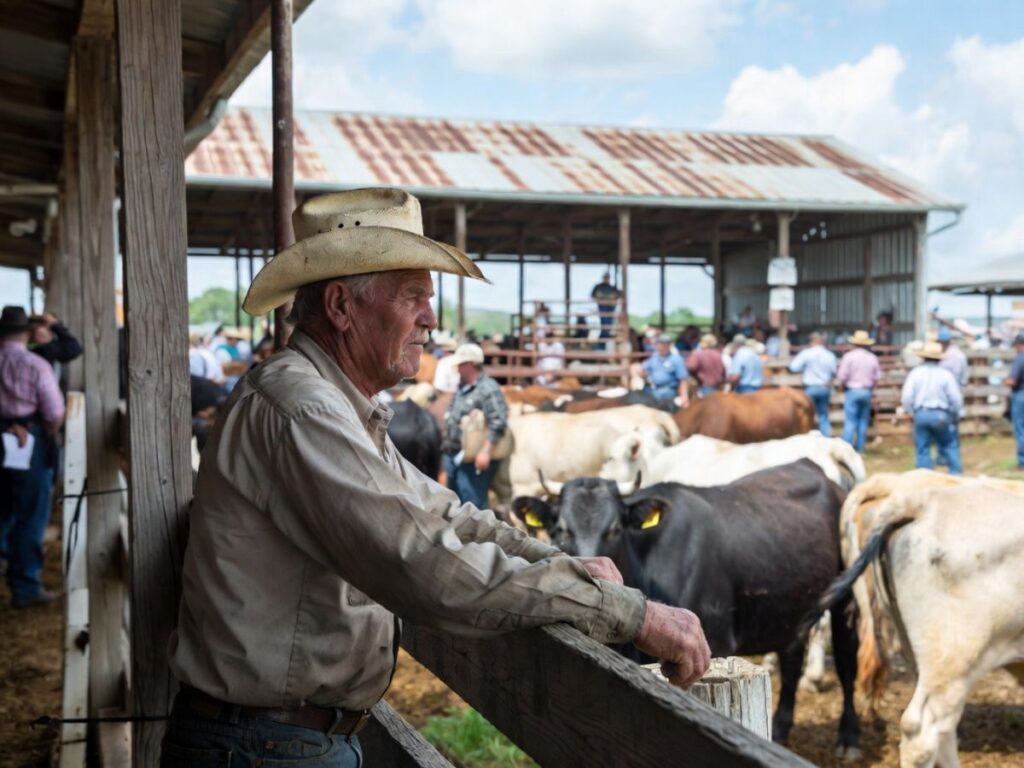
Walk into any sale barn in cattle country right now and you’ll feel it — that cautious kind of optimism. The kind where men are nodding at good prices but not quite smiling. Where the coffee’s hot and the bids are strong, but nobody’s putting their guard down.
They’ve been around long enough to know what comes after good times if you’re not watching.
And right now? There are six things worth watching very carefully.
First, the good news — and it’s real
Let’s not bury the lead. The beef market is genuinely profitable right now. Calves, feeders, and fed cattle are all trading well above year-ago levels across every category. Boxed beef prices are climbing ahead of schedule, moving higher even before the normal summer grilling demand kicks in.
“Prices continue to be strong for cattle and beef, with all categories well above year-ago levels. This will likely prevail in the coming months as beef production will continue to decrease, pushing prices even higher in 2026.” — Derrell Peel, Livestock Marketing Specialist, Oklahoma State University Extension
Tight supply is doing what tight supply always does — pushing prices up. Beef production is expected to keep shrinking through 2026, which means there’s genuine upside still in front of us.

So what’s the problem?
Volatility. Six different kinds of it, all hitting at once.
Oklahoma State University’s Derrell Peel, one of the sharpest minds in livestock marketing, just laid out the six factors that could challenge this market — and every cattle producer in the country needs to know what they are. You can read his full analysis at Farm Progress, but here’s what it means for you on the ground.
The six threats lined up against your bottom line
These aren’t hypotheticals. These are active, documented pressures already building in the market right now.
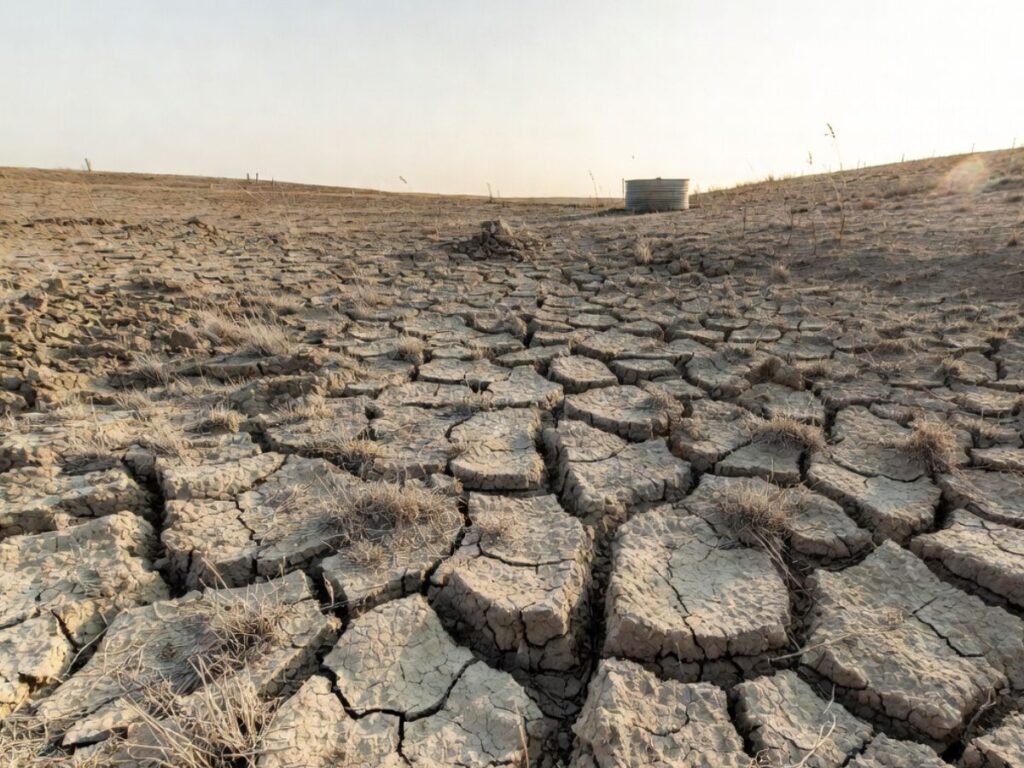
- Drought. Spring drought is the cruelest kind. It doesn’t just hurt this season — it can crater an entire year’s forage production before it gets started. Dry conditions are already showing up across key cattle regions. There’s still time for rain to turn things around, but producers are rightly playing defense. If you’re watching the sky every morning, you’re not alone.
- Geopolitical pressure. The war in Iran and broader global tensions are sending shockwaves through energy markets and consumer confidence. High gas prices don’t just hurt at the pump — they eat directly into the disposable income that consumers use to buy beef. Demand is your lifeline right now. Anything that threatens it is a direct threat to your prices.
- Infrastructure cracks. One major packing plant has already closed. Another is operating at reduced capacity. A large feedlot has shuttered. The JBS strike in Greeley, Colorado is adding short-term uncertainty on top of an already stressed packing sector. More adjustments may be coming. Watch this one closely — feedlot capacity has been shrinking for months and the ripple effects run deep.
- New World screwworm. This pest is creeping toward the U.S. southern border. If it crosses, the direct market impact may not be catastrophic — but the uncertainty reaction almost certainly will be, at least short-term. It’s the kind of headline that moves markets before anyone knows the real scope of the problem.
- The Mexican border closure. Already squeezing feeder cattle supply. Nobody knows exactly when it reopens, and nobody knows what the new normal looks like when it does. The longer it stays shut, the more Mexico’s cattle industry adapts domestically — and the more uncertain the eventual trade relationship becomes. Every day without clarity is another day of market anxiety.
- Trade war fallout. China is essentially gone from the U.S. beef export picture right now. Tariffs, retaliation, and geopolitical posturing have closed what was once a major market. Meanwhile, beef imports are rising to fill domestic demand gaps — but with growing uncertainty about sources, costs, and government policy. Markets have been jumpy about exactly this for months now.
Here’s what real range management looks like right now
Six threats. Any one of them alone would demand attention. All six at once means one thing above all else:
This is not the time to get comfortable.
The producers who come out ahead won’t just be the ones with the best cattle. They’ll be the ones who managed risk when they didn’t have to — before the pressure hit, not after.
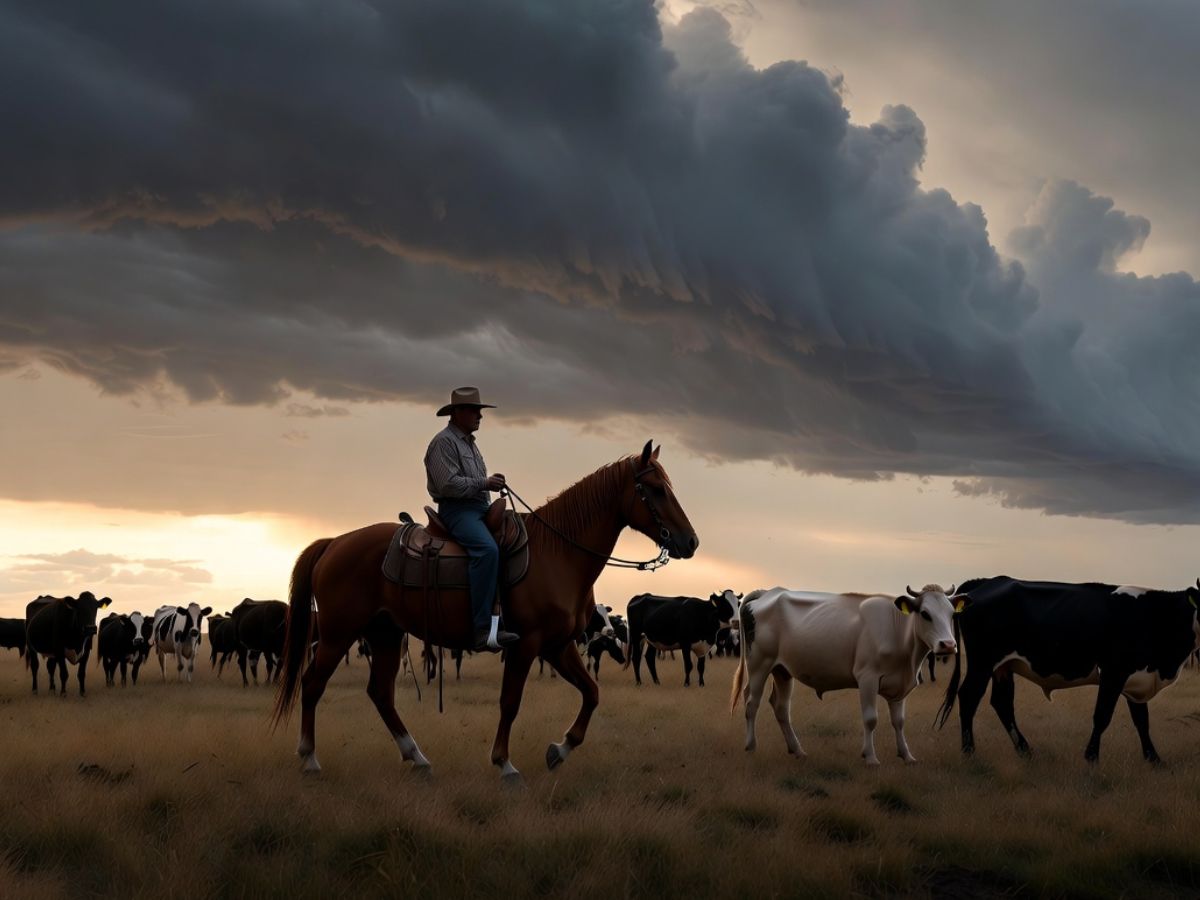
That means seriously evaluating tools like Livestock Risk Protection (LRP) insurance and put options. Not because the long-term outlook is bad — it isn’t. But because when volatility is this high and margins are at stake, having a price floor isn’t weakness. It’s good business. It’s how you stay in the game long enough to benefit from the strong years ahead.
- Assess your exposure at every critical marketing decision point
- Build in maximum flexibility on production and marketing timelines
- Don’t wait for the shoe to drop before deciding what to do
- Use formal risk management tools — LRP, put options — as insurance, not panic moves
The cowboys who built lasting operations in this country weren’t just tough. They read the weather before it arrived. They made their decisions from strength, not desperation.
The bottom line
The beef market is profitable. Genuinely, meaningfully profitable in a way that hasn’t been true for a while. That’s worth acknowledging.
But six serious headwinds are lining up — drought, geopolitics, infrastructure strain, screwworm, a closed border, and a trade war — and every one of them can create real short-term pain even if the long-term trend stays strong.
Watch them all. Stay flexible. Protect your downside. And don’t mistake today’s good prices for a guarantee of tomorrow’s.
That’s not pessimism. That’s just how ranchers who last do business.
Which of these six factors has you most concerned heading into the rest of 2026? Drop it in the comments — and pass this along to a fellow producer who needs to see it.