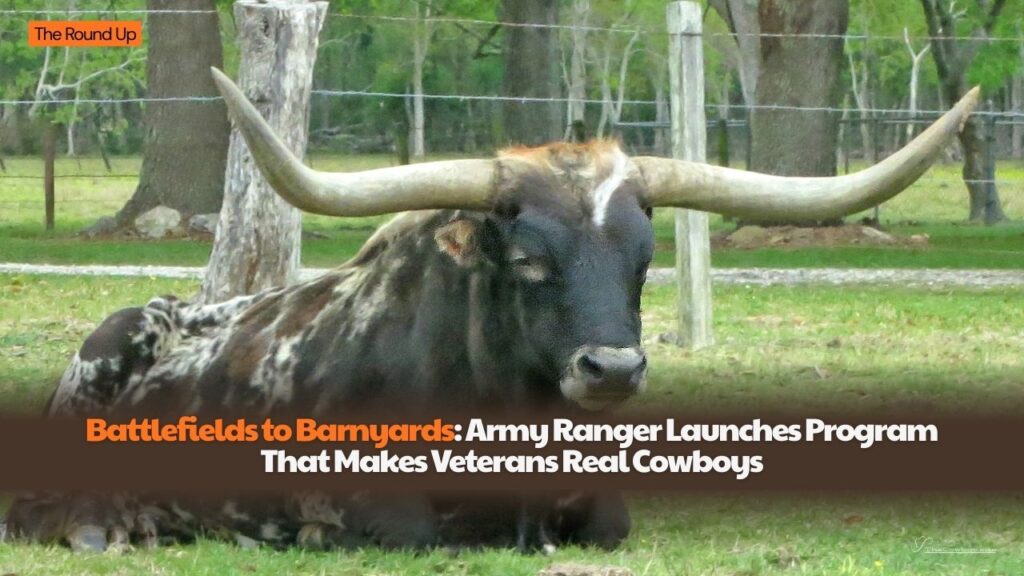
After years of high-intensity missions as a U.S. Army Ranger, Jeremy Clark wanted a new challenge that still demanded grit but offered peace. He found it on the back of a horse and the back of a herd. Together with his wife Heather, Clark built C-4 Cattle Co. near Grand Bay, Alabama, along the Gulf Coast. They started small, purchasing their first four Texas Longhorns before fences were even up. Today the ranch covers more than 130 acres and produces quality beef while giving the couple a new sense of mission.
Jeremy Clark’s Journey from Ranger to Rancher
Clark’s story began in uniform. As a Ranger he learned discipline, leadership and resilience under fire. When he left the service, he sought something equally demanding yet grounded. Ranching checked every box. “We bought our first four cows before we even had a fence up and we jumped right in,” Clark told RFD TV’s Market Day Report. The couple’s herd of Texas Longhorns grew quickly, proving that the same drive that carried him through military service translated straight to the range.
Heather Clark watched her husband thrive and saw the same potential in other veterans. Many leave the military feeling adrift, wondering what comes next. The Clarks decided their success could help others find the same path.
The Birth of Vets to Cowboys
In 2021 the Clarks officially launched Vets to Cowboys, a nonprofit dedicated to connecting transitioning veterans with experienced cattle ranchers. Mentors teach everything from herd management and fencing to breeding and market sales. The goal is simple but powerful: give first-generation ranchers the generational knowledge they never had growing up.
Heather Clark explained the natural fit: “Veterans specifically have a lot of the same values that cattlemen and people in agriculture do. A lot of what they learn in the service transitions into agriculture jobs beautifully. So, we’re able to combine that resilience of the warrior with the spirit of the American cowboy.”

The program already helped five veterans launch their own operations, with strong early feedback. Each participant gains practical skills while rebuilding the sense of purpose and teamwork they knew in the military.
How Ranching Heals and Builds the Next Generation
Ranch life delivers more than income. It delivers structure, physical challenge and daily wins that combat the isolation many veterans face after service. Working with animals and spending long days in open country has proven benefits for mental health.
“You see a lot of benefits from equine therapy and things of that nature,” Jeremy Clark said. “We’re using the cowboy way of life and working with cattle to help with mental health.”
The Clarks also focus on two bigger pictures: food security and workforce development. Veterans learn exactly what it takes to move beef from pasture to plate. They gain transferable skills that can lead to careers in agriculture or even construction. At the same time they help reverse troubling trends in farming.
Here are four key ways Vets to Cowboys is making a difference:
- Restoring purpose through hard daily work and clear responsibility
- Building new communities that mirror military camaraderie
- Passing down hands-on ranching knowledge that textbooks cannot teach
- Strengthening local agriculture by training new operators
Alabama’s most recent agricultural survey showed an 8 percent drop in farms; the national figure was 7 percent. Every veteran who enters ranching helps slow that decline.
Looking Ahead: A Mobile Training Future
The next chapter is already in motion. The Clarks are raising funds for a mobile training facility that can travel across the country. Their vision is to bring the Vets to Cowboys model to veterans in every region, expanding the reach far beyond Alabama’s Gulf Coast.
Five years in, the program has proven its worth. Veterans report renewed direction, improved mental health and real pride in their new cowboy identity. Jeremy and Heather Clark continue to blend the warrior ethos with the cowboy code, proving that service never really ends – it just changes saddles.
“We just want to partner with those mentors and make sure we don’t lose that knowledge and information that’s typically passed on from generation to generation that you can’t find in a textbook. We’re trying to make sure we fill in that gap.” – Heather Clark
The open range is calling a new generation of heroes, and thanks to one former Ranger and his wife, more veterans are answering that call every day.