Since Colorado began reintroducing gray wolves in December 2023, the conflict between ranchers and wildlife managers has played out in permit applications, legal appeals, public comment periods, and quiet frustration. Ranchers have complained. Agencies have responded. The wolves have kept killing livestock.
But no one had come forward — publicly, by name — to say that a wolf had been shot on their property. Until now.
Susan Nottingham, owner of Nottingham Ranch near Bond, Colorado, disclosed in early June 2026 that her ranch hand shot and killed a female wolf from the King Mountain pack in March of this year. The killing is under active investigation by Colorado Parks and Wildlife and federal authorities. She came forward anyway.
Her decision to go public is unprecedented in the short, contentious history of Colorado’s wolf reintroduction program. It is also a window into just how broken the relationship between ranchers and regulators has become.

What Led to the Shooting
A Pack, a Ranch, and a Season of Losses
The King Mountain pack was one of four known wolf packs in Colorado that produced litters in 2025. The pack traces its origins to the initial reintroduction effort — ten wolves brought from Oregon and released into Grand and Summit counties in December 2023 as part of Colorado Parks and Wildlife’s gray wolf restoration program.
By fall 2025, Nottingham says the toll on her operation was undeniable. She reported being 60 calves short — a loss she estimates at $180,000. CPW investigated and confirmed that wolves were responsible for killing three calves in October. But confirmation of losses and permission to act on them are two different things.

Nottingham applied for a lethal removal permit — the legal mechanism that allows ranchers to kill wolves that have repeatedly preyed on livestock. She was denied. She appealed. She hired attorneys. She spent tens of thousands of dollars working inside the system.
The losses did not stop.
The Decision on the Ground
In March 2026, a ranch hand on the Nottingham property shot and killed a female wolf from the King Mountain pack. Nottingham has not shielded herself from the consequences. She disclosed the shooting publicly and is cooperating with investigators.
Her rationale was stated plainly in a public comment submitted to the Federal Register:
“Colorado is not an appropriate habitat for gray wolves — it is not Yellowstone Park.”
That single sentence captures a frustration shared by many ranchers across the West — that wolf reintroduction programs are designed by people who don’t bear the costs of them.
The Wolf That Was Killed
The story of the wolf herself adds a layer of complexity that is difficult to ignore.
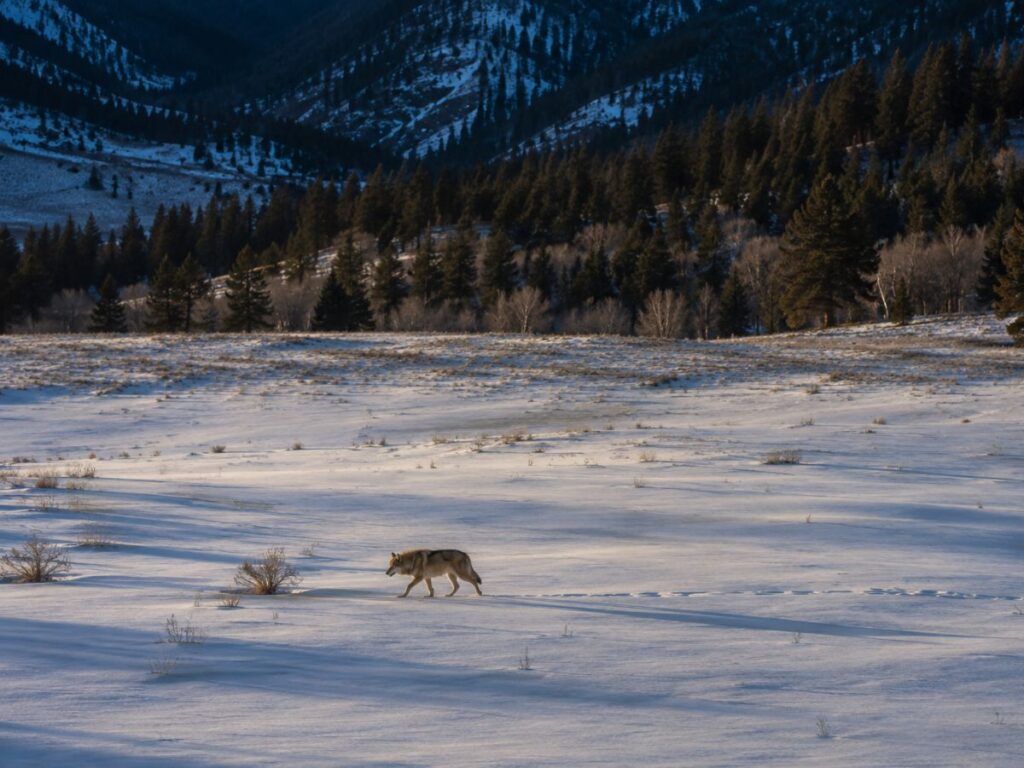
Just two months before she was shot, the female’s mate died during a routine government collaring operation in January 2026. She was already raising four yearling pups without him. When she was killed in March, those pups lost their second parent in the span of eight weeks.
The King Mountain pack — already fragile — is now in serious jeopardy. Wildlife managers are monitoring the remaining animals, but a wolf pack without experienced adults faces steep survival odds, particularly heading into a summer when the yearlings would be learning to hunt independently.
For context on how wolf pack dynamics affect survival and territory, the International Wolf Center has documented pack behavior and the critical role of breeding pairs here.
The Wider Conflict: Colorado’s Wolf Program Under Pressure
A Program Built on Compromise That Satisfies No One
Colorado’s wolf reintroduction was approved by voters in 2020 via Proposition 114 — the first time in U.S. history that citizens voted directly to restore a predator species. The margin was narrow: 50.9% in favor. The divide was geographic and cultural, with urban voters largely supporting reintroduction and rural, ranching communities largely opposing it.
The program launched in December 2023, and within months, livestock depredation reports began accumulating. As the Colorado Sun has reported, the Nottingham case is the first public admission of a wolf shooting since the program began — but few in the ranching community believe it is the only one that has occurred.
The compensation system for livestock losses exists but is widely criticized as slow, under-resourced, and insufficient. Ranchers argue that confirmed kills represent only a fraction of actual losses, since wolves often drive cattle off cliffs, cause fatal injuries that don’t present as obvious predation, or simply scatter herds in ways that lead to animals going missing.
What Federal Law Says
Gray wolves in Colorado occupy an unusual legal status. They were reintroduced as a “nonessential experimental population” under Section 10(j) of the Endangered Species Act — a designation that gives wildlife managers more flexibility than full ESA protection, but still makes killing a wolf a federal offense in most circumstances. The U.S. Fish and Wildlife Service oversees the federal framework governing wolf protections and experimental population rules.
Lethal removal permits are available under specific, narrow conditions. The bar is high, the process is slow, and the outcomes — as Nottingham’s case demonstrates — are not guaranteed even when livestock losses are confirmed.
The Ranching Community’s Response
Nottingham’s public disclosure has drawn both support and criticism. Among ranchers and agricultural advocates, many have praised her willingness to speak openly about a situation they say reflects a reality the government refuses to acknowledge. Others have expressed concern that her candor could invite stricter enforcement and federal scrutiny on ranches across the region.
The broader ranching community in Colorado has been pushing for expanded lethal removal authority, faster compensation processing, and a formal review of whether the current wolf population management plan is working as intended. The Colorado Farm Bureau has been among the most vocal organizational voices on these issues, arguing that the program’s human costs have been systematically underweighted.
What Happens Next
The investigation into the King Mountain wolf shooting remains open. Nottingham faces potential federal charges. The outcome of that investigation will likely set a precedent for how similar cases are handled going forward — and whether ranchers who come forward honestly are treated differently than those who don’t.
Meanwhile, the four orphaned yearlings from the King Mountain pack are being monitored. Whether they survive as a functioning pack, disperse, or are absorbed into other groups remains uncertain.
And the larger question — whether Colorado’s wolf reintroduction program can survive the gap between what voters approved and what ranchers are living — remains unanswered.
What is certain is that Susan Nottingham’s decision to go public has changed the conversation. The ranching community’s frustration is no longer a background noise. It has a name, a number — 60 calves, $180,000 — and now, a dead wolf at the center of it.