
On June 3, 2026, a three-week-old calf near La Pryor, Texas was confirmed as the first domestic case of New World Screwworm in the United States in decades.
By June 8th, there were five confirmed cases – spread across four Texas counties and into New Mexico, affecting cattle, a goat, and a dog. A 12-mile quarantine zone had been established. The USDA had activated an emergency response. And cattle ranchers across the South were receiving urgent advisories to put eyes on their livestock every single day.
The New World Screwworm had come back.
For most Americans, the name means nothing. But for the cattle industry – and for the federal agencies that spent decades and billions of dollars fighting it – it means everything. This is a parasite that once devastated American livestock on a scale almost impossible to imagine today. It was beaten through one of the most ambitious and creative public health campaigns in U.S. history. And now, after a three-year northward march through Central America and Mexico, it is here again.
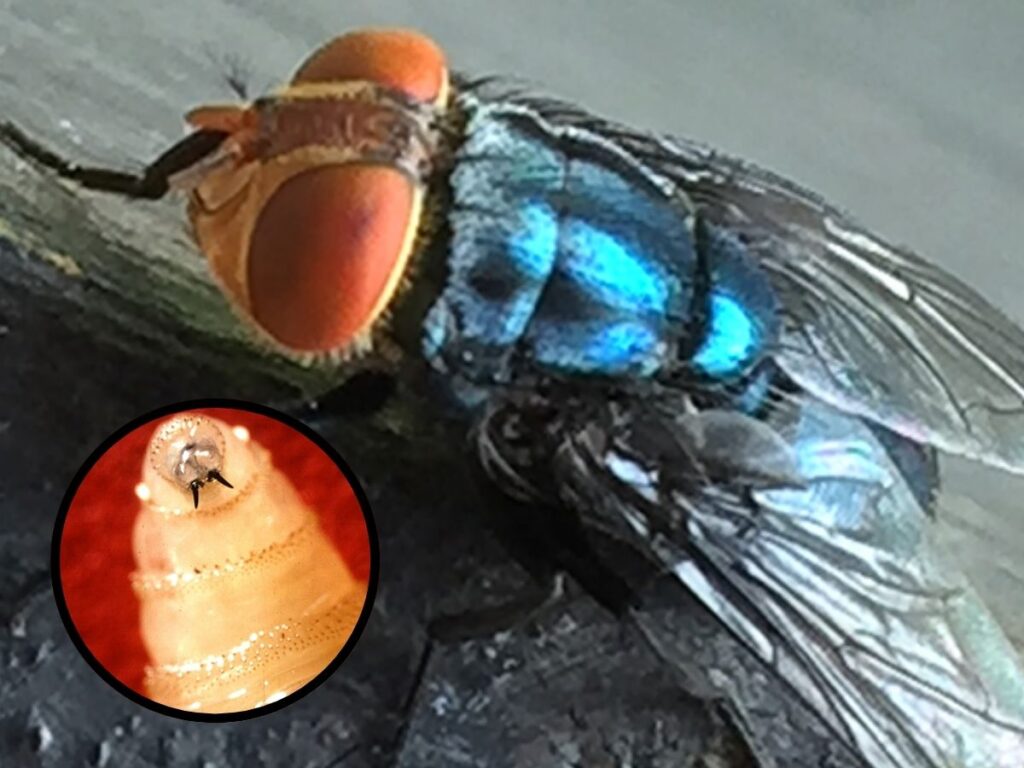
What the New World Screwworm Actually Does
Understanding why this parasite is so feared requires understanding what makes it different from almost every other pest known to agriculture.
Most flies lay their eggs in dead or decaying matter. The New World Screwworm fly – Cochliomyia hominivorax, a name that roughly translates to “human eater” – does not. It targets the living.
A female screwworm fly seeks out any warm-blooded animal with an open wound. The wound doesn’t need to be large. A tick bite. A scratch from barbed wire. A cut sustained during calving. Any opening in the skin is enough. The female lands, deposits her eggs – up to 300 at a time – and leaves. She may lay up to 3,000 eggs across her 10- to 30-day lifespan.
When the eggs hatch, the larvae do not feed on the surface. They burrow inward, into living tissue, feeding as they go deeper. The wound grows. Other flies are attracted to the scent. More eggs are laid. More larvae hatch. The infestation compounds.
Left untreated, a screwworm infestation can kill a small animal within days. It can kill a full-grown cow in under two weeks. And because the larvae actively dig deeper to avoid removal – rotating in a corkscrew motion that gives the fly its name – the damage accelerates faster than most producers expect.
“Cuts as small as a tick bite may attract a female fly to lay her eggs. The larvae from a single infestation can kill smaller animals, and multiple infections can kill mature cattle.” – USDA Animal and Plant Health Inspection Service
It attacks any warm-blooded animal. Livestock. Deer. Dogs. And in rare but documented cases – people. Since 2023, the parasite has affected more than 171,700 animals and 2,000 humans across Central America and Mexico. Ten human deaths have been recorded in the outbreak zone.
How America Beat It Once Before
The United States was not always free of the New World Screwworm. Through the 1930s, 40s, and 50s, it was a persistent and devastating presence across the southern states. By the early 1960s, annual losses to the cattle industry were running between million and million – equivalent to nearly billion today.
What followed was one of the most remarkable pest eradication campaigns in scientific history.
Researchers developed a strategy called the Sterile Insect Technique. Rather than relying on pesticides – which couldn’t reach the flies across millions of acres of open range – they would fight the insect on its own biological terms. Male screwworm flies were bred in massive numbers, sterilized using radiation, and released by aircraft across the affected regions. Sterile males mated with wild females. Those females produced no offspring. Over successive generations, the wild population collapsed.
The USDA’s eradication program, launched in 1962, operated a production facility in Mission, Texas that at its peak produced 200 million sterile flies per week. Between 1962 and 1975, more than 96 trillion sterile flies were released across the southern United States, Mexico, and targeted outbreak zones.
The last indigenous U.S. case was recorded in Texas in 1966. The program was declared a complete success – one of the only times in history that a major agricultural pest was entirely eliminated from a continent through science alone.
The Return – How It Got Back
The screwworm never disappeared from South America. It remained endemic across much of the continent, kept in check south of Panama by a permanent sterile fly release barrier maintained jointly by the U.S. and Panamanian governments.
But starting in 2023, something changed. The parasite began moving north through Central America – faster than the barrier could contain it. By 2025, cases were being documented in Mexico. Wildlife, particularly white-tailed deer, became efficient carriers, moving the fly across borders and through terrain that no quarantine line could fully seal.
Climate shifts have played a role. The screwworm is a tropical species that historically died off in colder winters. As those winters have grown milder, the fly’s viable range has expanded northward. An entomologist tracking the outbreak put it plainly: “It’s hard to stay ahead of it because of how fast that fly is able to move and regenerate.”
By June 3, 2026, it had crossed into the United States.
Where Things Stand Right Now
As of June 8, 2026, the USDA has confirmed five cases across two states:
- Zavala County, Texas – two confirmed cases in cattle, including the initial detection
- La Salle County, Texas – one confirmed case in a calf
- Gillespie County, Texas – one confirmed case in a goat
- Lea County, New Mexico – one confirmed case in a dog
A 12-mile quarantine zone surrounds the original detection site. Sterile fly releases – the same technique that worked in the 1960s – are being deployed. The USDA has stood up a unified response hub at Screwworm.gov to coordinate the national effort.
The agency says it is confident there is no immediate threat of mass infestation. But it has also been direct with ranchers and livestock owners about what needs to happen right now:
- Check your animals every single day for signs of infestation
- Treat and cover all open wounds immediately – no wound is too small to matter
- Know your veterinarian’s contact information and call at the first sign of unusual behavior or wound activity
- Report suspicious cases immediately to your state veterinarian or the USDA
What’s at Stake
Cattle futures markets responded immediately to the confirmation, with prices spiking as traders processed what a screwworm outbreak could mean for U.S. beef supply. The reaction reflects what agricultural economists have been saying for months: the threat here is not just to individual animals. It is systemic.
The USDA has estimated that an unchecked screwworm outbreak could cause .8 billion in damage to Texas’s economy alone. Texas is the largest cattle-producing state in the nation. A significant infestation there would ripple through the entire U.S. beef supply chain – affecting prices, availability, and the livelihoods of ranching families across the country.
The Texas Tribune has reported that the outbreak has already put North Texas cattle ranchers on high alert, with producers in counties far from the confirmed cases beginning daily checks as a precaution.
The screwworm was beaten once. The tools to beat it again exist. But this time, the fly has a 60-year head start on a nation that largely forgot it existed – and a warming climate that makes eradication harder than it was in 1966.
Ranchers know the stakes. Now the rest of the country is starting to understand them too.






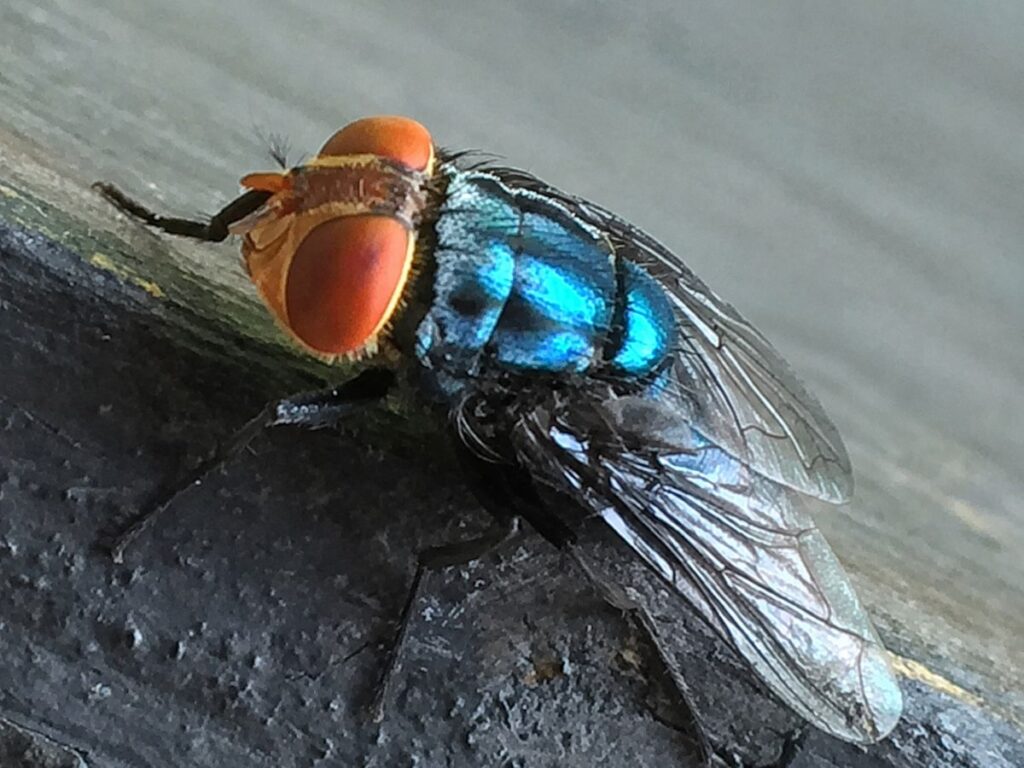

What is the recommendation if an animal is infected? Is it best to dispatch the amimal or can the infected wound be treated to destroy the larvae inside?
Yes, there are treatment options available if caught soon enough. If you have an animal infected, it’s best to contact a veterinarian to find out your options quickly. There are also over the counter treatments that may be available as well such as anti-parasite paste and such.