There is a version of America that older generations remember clearly and younger ones have mostly never experienced: a version where the meat at the grocery store — or more likely the butcher shop on Main Street — came from a farm within driving distance, processed at a plant the next town over, by people whose names you knew.
That version of America did not disappear by accident.
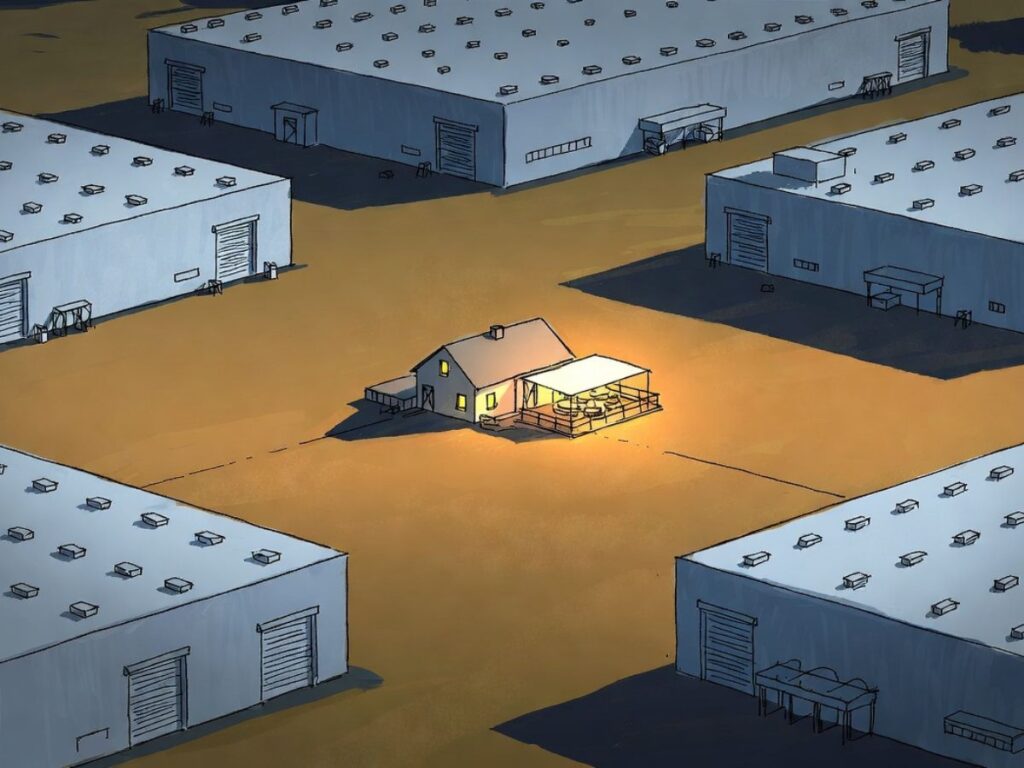
Over the past four decades, corporate consolidation systematically dismantled the local and regional meat processing infrastructure that once connected American ranchers directly to American consumers. More than half of the country’s small and mid-size meat processors have shut down over the past 20 years alone, unable to compete with corporations operating industrial-scale plants that process thousands of cattle every single day.
The result: four companies — Tyson, JBS, Cargill, and Marfrig — now control approximately 85% of the U.S. beef market. In 1977, those same four companies controlled just 25%.
On June 3, 2026, the federal government took its most direct step yet toward changing that.
What the USDA Just Announced
U.S. Secretary of Agriculture Brooke Rollins launched the Small Processors Action Plan — a comprehensive package of new investments, regulatory reforms, and practical tools designed specifically to support small and independent meat and poultry processing plants across the country.

The centerpiece is $60 million in new funding through the fourth phase of the Meat and Poultry Processing Expansion Program (MPPEP), administered by USDA’s Rural Business and Cooperative Service.
The money is divided into two tracks:
- Small and Very Small Processors — grants ranging from $10,000 to $2 million for facility construction, modernization, equipment upgrades, technology adoption, and worker training
- Intermediate Processors — a parallel competition for mid-tier operations looking to scale up and strengthen regional supply chains
Applications are being accepted through August 7, 2026. Eligible applicants include for-profit businesses, nonprofits, producer-owned cooperatives, tribal entities, and any domestically owned facility primarily processing cattle in the United States.
More Than Money — Removing the Red Tape
The $60 million investment is significant. But Secretary Rollins made clear that the funding alone is not the full story.
“We are removing overly burdensome red tape, improving service, and giving small plants the clarity and support these businesses need to operate safely, grow, and compete.” — USDA Secretary Brooke Rollins
The Small Processors Action Plan includes a set of regulatory reforms aimed at reducing the friction between small processors and the federal agencies they deal with daily. The goal is faster responses, clearer guidance, and fewer compliance barriers — without weakening food safety standards.
One of the most practical new tools is a mobile app launched by USDA’s Agricultural Marketing Service for its Remote Grading Program for Beef. Official USDA beef grading — the system that assigns familiar labels like Prime, Choice, and Select — has traditionally required an onsite federal inspector, a cost and logistical burden that many small processors simply could not sustain. The new app allows processors to submit carcass images remotely for grading, opening access to premium market tiers that were previously out of reach for independent operations.
For a small processor trying to sell to a regional grocery chain or a high-end restaurant that requires USDA-graded beef, this is not a minor convenience. It is a market door that was previously closed.
Why This Matters Beyond Agriculture
The decline of small meat processors is not just an agricultural story. It is an economic story that played out in communities across every region of the country.
When a local processing plant closes, the ripple effects are immediate and lasting. Ranchers lose nearby processing options, forcing them to transport animals hundreds of miles at significant cost — or sell to large packers at terms they do not control. Rural jobs disappear. The economic activity that once circulated within a community gets redirected to distant corporate facilities. And consumers lose access to locally sourced, traceable meat products.
The consolidation of the beef supply chain has been a direct contributor to the beef price increases American families have felt at the grocery store. When four companies control the processing bottleneck between the farm and the store shelf, they hold enormous leverage over both ends of the supply chain — suppressing what ranchers receive and elevating what consumers pay.
This dynamic has drawn attention at the highest levels. The White House issued an executive order in February 2026 titled “Ensuring Affordable Beef for the American Consumer,” directing federal agencies to take action. The USDA and Department of Interior followed with a joint announcement in March, pledging expanded support for ranchers. The June 3rd Small Processors Action Plan is the latest — and most concrete — step in that broader effort.
The Scale of What Was Lost
To understand why this investment matters, it helps to understand the scale of what consolidation actually did to independent processors.
The Big Four packers now operate plants that process upward of 5,000 cattle per day. A small independent processor might handle 50 to 200. The economics of that gap are nearly impossible to bridge through normal market competition alone — especially when large packers can absorb short-term losses to undercut local pricing, control relationships with major retailers, and leverage scale in ways that smaller operations simply cannot match.
Previous rounds of the MPPEP program have distributed approximately $450 million in federal grants to help small processors expand. Stories like Seven Hills Food in Virginia — which successfully partnered with Kroger to stock grass-fed beef across 100 stores — show what is possible when independent processors get the resources to compete. But those stories have been the exception, not the rule. Grants typically cover only 20% of total project costs, requiring processors to secure substantial additional capital to match federal funding.
The new Phase 4 funding, combined with the regulatory reforms in the Small Processors Action Plan, is designed to lower those barriers.
What It Means for Ranchers, Communities, and Consumers
The practical implications of a rebuilt small processing sector run in three directions simultaneously.
For ranchers, more local and regional processing options mean more negotiating power. When there are multiple buyers for your cattle rather than one or two dominant packers, market dynamics shift in the producer’s favor.
For rural communities, processing plants are anchor employers. A facility that processes several hundred animals per week can sustain dozens of direct jobs and support additional employment across the local economy — from feed suppliers to equipment dealers to the diner where plant workers eat lunch.
For consumers, a more distributed processing landscape means more options: locally sourced beef with traceable origins, regional brands, and direct-to-consumer models that the consolidation era all but eliminated. It also means a more resilient supply chain — one less vulnerable to the kind of disruptions that occurred when a handful of large plants shut down during the COVID-19 pandemic and beef virtually disappeared from grocery store shelves overnight.
The National Provisioner reported that industry response to the announcement has been broadly positive, with producer groups and independent processor associations welcoming both the funding and the regulatory relief measures.
The $60 million will not reverse four decades of consolidation on its own. Rebuilding local processing infrastructure takes years, not months. But it is a concrete, fundable step in a direction that ranchers, rural communities, and independent food producers have been asking for — for a very long time.
The local butcher is not gone. It turns out the federal government just decided it is worth bringing back.