A Number That Puts Everything in Context
On January 30, 2026, the USDA released its annual cattle inventory report. The headline figure was stark: as of January 1, 2026, there were 86.2 million head of cattle and calves on U.S. farms — the lowest total in 75 years, and a continuation of a decline that has now stretched across eight consecutive years.
To put that in historical terms: the United States has fewer cattle today than it did when Harry Truman was president.
The beef cow herd — the animals that actually produce calves — stands at just 27.6 million head, its lowest count since 1961. The 2025 calf crop came in at 32.9 million head, a 2% decline from the prior year and the second consecutive record low. Cattle on feed are down 3%. Every category that tracks the depth and future of the American beef supply is pointing in the same direction.
For anyone trying to understand why beef prices are at record highs, why major meatpacking plants are closing, and why experts keep saying relief is still years away — this is the root cause. Everything else is downstream of this number.

Support the Ranchers Who Are Still Standing
The best response to a broken supply chain is a shorter one. Buying directly from farms means your money goes to the people raising the animals — not to the corporate middle.
Florida Premium Beef is one operation doing it right: 100% grass-fed and finished beef, raised on Florida farms without antibiotics, hormones, or glyphosate, shipped nationwide with free delivery on orders over $250. Whole, half, and quarter cow shares are available alongside individual cuts and subscription boxes. When the big processors close their doors, the ranchers still at work deserve your business.
How Eight Years of Contraction Happened
The U.S. cattle herd does not collapse overnight. It contracts slowly, driven by decisions made by tens of thousands of individual ranchers responding to the conditions in front of them. Understanding the current crisis means tracing those decisions back to their origins.
Drought Was the Trigger
The most significant single factor behind the herd contraction has been drought — prolonged, severe, and geographically broad. Over the past several years, major cattle-producing states including Texas, Kansas, Oklahoma, New Mexico, and parts of the Mountain West experienced drought conditions that damaged grazing pasture, reduced hay yields, and drove up the cost of supplemental feed.
When feed becomes expensive and pasture becomes scarce, ranchers face a hard choice: spend money they may not have to keep animals, or sell. Many chose to sell. And critically, many sold breeding cows — the females that would have produced the next generation of calves. The American Farm Bureau Federation reported that the herd has contracted by approximately 8.5 million head — about 9% — since the last cyclical peak in 2019. Those breeding decisions made under duress are now reflected in a calf crop that has set consecutive record lows.
The Border Closed — and Stayed Closed
The United States has historically imported live cattle from Mexico to supplement domestic supply — roughly 1.2 to 1.5 million head per year. That flow stopped in July 2025, when the USDA shut down the southern border to live cattle imports after detecting the northward spread of the New World screwworm in Mexico.
In June 2026, the USDA confirmed the first U.S. case of New World screwworm in South Texas, and the border has remained closed with no firm reopening date announced. The roughly 1.2 to 1.5 million cattle that would have entered the U.S. processing system from Mexico are simply not there.
Structural Pressures That Pre-Date the Drought
Beyond weather, the cattle industry faces longer-term structural headwinds that have been compressing the herd for years:
- Aging ranchers: The average age of U.S. cattle producers has risen steadily, and many operations lack younger family members or buyers to take them over. When a ranch closes, that land and those animals often leave the beef production system permanently.
- Urban and suburban expansion: Agricultural land near growing population centers is being converted to development at a sustained rate, permanently removing grazing acreage from the supply side.
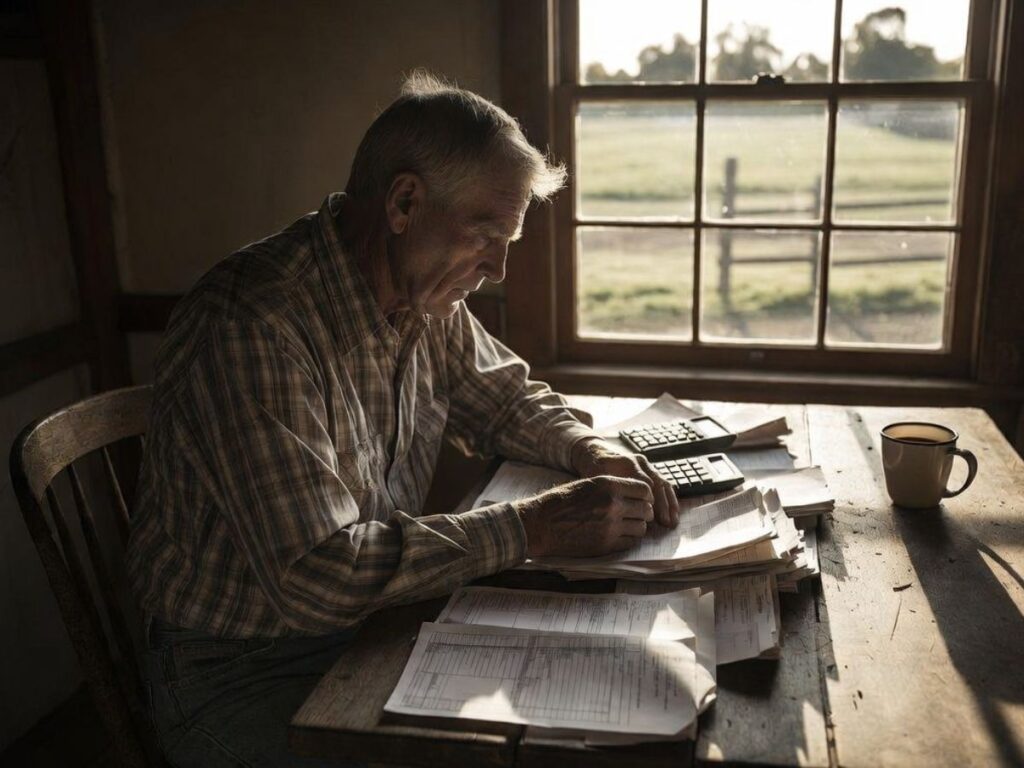
- Capital costs: Starting or expanding a cattle operation requires significant capital at a time when interest rates rose sharply. Many producers who might otherwise expand have been unable or unwilling to take on debt.
Kevin Good, Vice President at CattleFax, one of the industry’s primary market research firms, summarized the situation plainly: “We are keeping heifers, but it’s at a much slower pace than we did the previous cycle.”
What a Shrinking Herd Does to the Market
The consequences of an 86.2 million head cattle inventory — down from 94.8 million at the last peak — ripple through the entire food system.
Beef Prices at Record Highs
With fewer cattle moving through the system, the supply of beef reaching consumers has tightened. At the same time, American demand for beef has not fallen — it has actually grown. The result is a price environment unlike anything most consumers have experienced in their lifetimes.
Ground beef now averages .70 per pound nationally, up from .96 in 2021. Beef steaks are averaging .73 per pound. The USDA projects beef prices will climb another 10% to 18% before the end of 2026. Fortune reported in April 2026 that no meaningful price relief is expected before 2028.
Processing Plants Are Closing
When cattle numbers fall, the math at processing facilities changes. Plants built to operate at high volume become financially unviable at lower throughput. The result has been a wave of closures that has itself further tightened the supply chain:
- Tyson Foods permanently closed its Lexington, Nebraska plant in January 2026, removing the capacity to process 5,000 cattle per day — roughly 4.8% of total U.S. daily slaughter capacity
- JBS announced in June 2026 that it will close its Souderton, Pennsylvania facility by August 14, eliminating 1,700 jobs and further reducing processing capacity
These closures are not causing the cattle shortage — they are a consequence of it. But they compound the pressure on ranchers who now have fewer buyers and must transport cattle farther to reach operating facilities.
Imports Are Filling — But Cannot Fix — the Gap
U.S. beef imports climbed 17% in 2025 compared to 2024, and have risen 48% by volume since 2020, as processors sought to offset the domestic shortfall. But imports are a bridge, not a solution. They do not rebuild the domestic herd. They do not replace the breeding cows that were sold. And with the Mexico border closed, the single largest source of live cattle imports is currently unavailable.
The Biology of Recovery — Why 2028 Is the Earliest Realistic Target
One of the most important and least understood aspects of the cattle shortage is that it cannot be fixed quickly, regardless of market incentives or policy decisions. The timeline is dictated by biology.
Here is what the recovery process actually looks like:
- A rancher decides to retain heifers for breeding rather than sending them to market
- Those heifers must reach breeding age — typically around 14 to 15 months
- After breeding, the gestation period for cattle is approximately nine months
- The resulting calf must then be raised to market weight — another 18 to 22 months for beef production
From the decision to expand to a marketable animal: roughly 30 months at minimum. That means decisions being made by ranchers right now will not produce meaningful additional beef supply until 2028 at the earliest.
There are early signs that some rebuilding is underway. Surveys indicate that approximately half of cattle operations bred more females in 2025 than in 2024. Ranchers are slaughtering fewer cattle, a signal that they are beginning to retain animals for future production rather than cashing out at today’s high prices.
But the pace is cautious. Ranchers who were burned by the drought are not rushing to expand. Pasture conditions in some regions remain stressed. And the capital required to build a larger operation remains a barrier for many producers.
“We are keeping heifers, but it’s at a much slower pace than we did the previous cycle.” — Kevin Good, Vice President, CattleFax
The current USDA outlook does not anticipate meaningful herd expansion before 2028. Some analysts place the timeline for genuine price relief even further out — Fox Business reported in 2026 that beef prices may not meaningfully decline until 2029 given the pace of herd rebuilding.
What This Means Looking Forward
The U.S. cattle herd has been through contraction cycles before. The cattle industry operates on roughly a 10 to 13-year cycle of expansion and contraction, and history suggests the herd will eventually rebuild. What makes the current situation unusual is the convergence of factors that deepened the contraction and are slowing the recovery: back-to-back droughts, a closed import border, structural demographic shifts in ranching, and a demand environment that keeps prices high even as supply tightens.
For consumers, the near-term outlook is continued pressure at the grocery store. For ranchers, the high prices are providing economic incentive to expand — but the road back is long, and not every producer who sold out during the drought will return. For the broader food system, the cattle shortage is a reminder of how long the supply chain for a single food category actually is, and how quickly disruptions in that chain translate into consequences for everyone who eats.
The herd stood at 86.2 million head on January 1, 2026. Getting it back to where it was in 2019 — let alone to the levels of past decades — will take years of favorable weather, patient investment, and biological time that no amount of market pressure can compress.