America’s Beef Tariffs Are Stuck in the 1930s. A New Bill Wants to Change That.
Somewhere between the Roosevelt administration and today, American consumers quietly became dependent on foreign countries for a significant share of their meat supply. The numbers are stark: more than 70% of the lamb eaten in the United States now comes from abroad, and the country imports roughly 2.9 billion pounds of beef every year. Over 2 million live cattle crossed into the U.S. in 2024 alone.
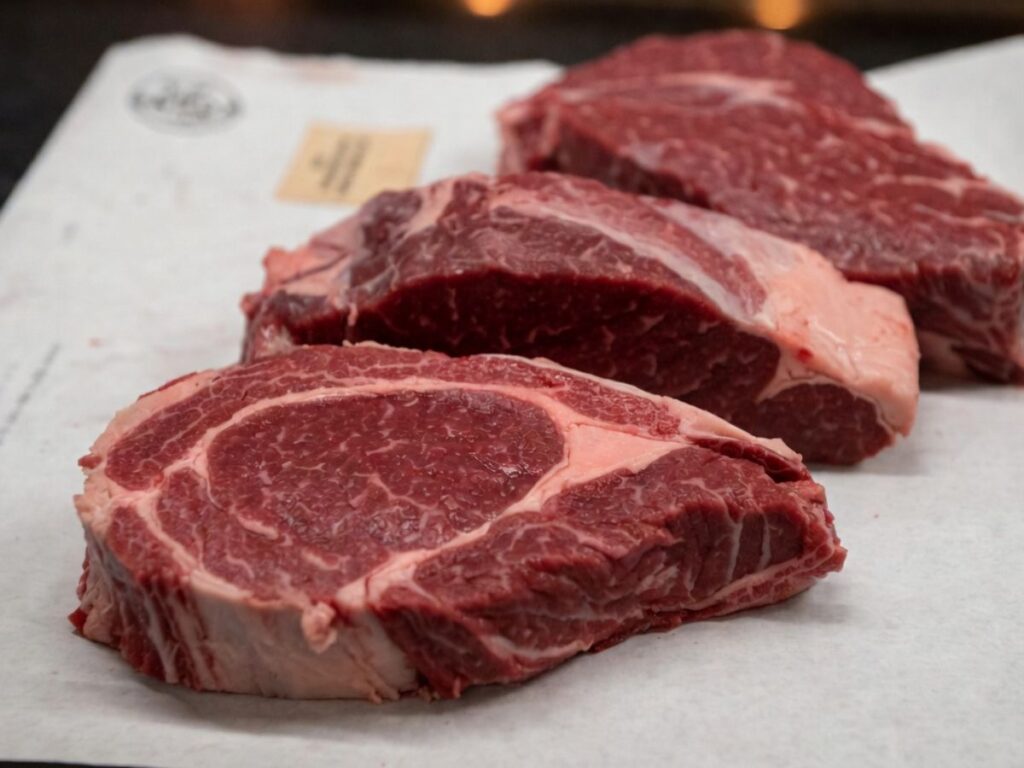
And for nearly the entire time that shift was happening, the import tariff on beef sat at 4.4 cents per kilogram. That rate dates to the 1930s. It has never been meaningfully adjusted for inflation.
A new piece of Senate legislation introduced in late June 2026 aims to correct that. And one of the country’s most prominent cattle producer organizations is celebrating its arrival.
What the Home Market Restoration Act of 2026 Would Do
On June 25, 2026, Senator Bill Cassidy, a Republican from Louisiana, introduced the Home Market Restoration Act of 2026. The bill targets what its supporters call a fundamental imbalance in how the United States treats imports of agricultural products, particularly meat.

The legislation would create a new tariff-rate quota system for a range of import-sensitive products. Under a tariff-rate quota, imports below a set threshold are taxed at a lower “in-quota” rate, while imports above that threshold face a sharply higher “over-quota” rate. The structure is designed to allow some foreign product to enter the market while discouraging the kind of large-scale import volumes that, critics argue, suppress prices paid to domestic producers.
The Proposed Numbers
- Beef: The current tariff of 4.4 cents per kilogram would increase to $1.68 per kilogram, or 76 cents per pound, for in-quota imports. Over-quota beef would face a rate of $2.97 per pound.
- Lamb and goat meat: The current rate of 0.7 cents per kilogram would rise to $2.76 per kilogram, or $1.25 per pound, for in-quota imports. Over-quota lamb would be taxed at $5.00 per pound.
- Live cattle: A new cap of 1.5 million head per year would be established, with a 25% in-quota tariff and a 50% over-quota tariff.
Crucially, the legislation also includes a mechanism for annual inflation adjustments, meaning the tariff rates would not again be left to erode in real value over decades. The bill covers a broader range of agricultural products beyond beef and sheep, including shrimp, crawfish, catfish, rice, honey, and goat meat.
Who Is R-CALF USA and Why Do They Care?
R-CALF USA (Ranchers-Cattlemen Action Legal Fund, United Stockgrowers of America) is one of the largest organizations representing independent cattle and sheep producers in the United States. The group has been outspoken for years about the competitive disadvantages it says domestic producers face from foreign imports.
CEO Bill Bullard called the legislation “historic and urgently needed reform” of what he described as the country’s antiquated tariff-rate schedules and import quotas.
“Current tariffs on lamb and beef have proven ineffectual at protecting our cattle and sheep industries from excessive price-depressing imports.”
— Bill Bullard, CEO, R-CALF USA
The organization’s position goes further than simple economic protectionism. R-CALF USA has characterized the degree of American dependence on foreign food as a national security concern, arguing that the country’s capacity to feed itself should not be left vulnerable to disruptions in global supply chains, whether from trade disputes, geopolitical conflict, or logistical crises.
The 90-Year Problem No One Fixed
To understand why this bill exists, it helps to understand just how long the current system has been in place and how much the world changed while it remained static.
The tariff rates now in place for beef and lamb were set before World War II. At the time, the United States was far more self-sufficient in food production. Global trade was a fraction of what it is today, and the idea that a significant portion of American meat consumption would eventually be sourced from Australia, New Zealand, Canada, Mexico, and other countries would have seemed unlikely.
But that is precisely what happened. Through decades of free trade agreements and the slow erosion of tariffs by inflation, the competitive advantage held by domestic producers narrowed. Today, according to data cited by R-CALF USA, the U.S. imported approximately 330 million pounds of sheep meat in 2025. The annual beef import figure averaged 2.9 billion pounds between 2020 and 2024.
The USDA’s agricultural trade data reflects the scale of this shift. The U.S. has long been both a major exporter and importer of beef, but the import side of that ledger has grown substantially over the past several decades.
Several countries now have tariff-free or preferential access to the U.S. market through free trade agreements, including Australia, Canada, and Mexico, all of which are significant exporters of beef, lamb, or cattle. That access was negotiated without corresponding adjustments to the domestic tariff structure for sensitive agricultural products, according to critics of the current system.
What Opponents and Trade Partners May Say
Legislation of this kind rarely passes without pushback, and the Home Market Restoration Act of 2026 is unlikely to be an exception.
Countries that export beef and lamb to the United States, particularly Australia and New Zealand, which supply a large share of American lamb imports, are likely to view the proposed tariff increases as a significant barrier to trade. Trade economists often argue that tariffs of this nature raise consumer prices and can invite retaliatory measures from trading partners.
The Office of the U.S. Trade Representative maintains the country’s existing free trade agreement obligations, which may complicate how new tariff-rate quotas are structured or applied. Any legislation that affects tariff schedules must navigate existing international commitments.
Consumer advocacy groups may also weigh in. Higher import tariffs on beef and lamb, if effective, would likely reduce the supply of lower-cost imported product on grocery store shelves, potentially pushing retail prices higher.
Supporters of the bill counter that the long-term cost of losing domestic production capacity is higher than any short-term price increase, and that food security is a national interest that justifies the trade-off.
Why This Matters Beyond the Ranch
For most Americans, the connection between Senate tariff legislation and their weekly grocery run is easy to overlook. But the dynamics being debated in this bill touch something more fundamental than farm economics.
The question of where food comes from, and how resilient that supply chain is, became more visible during the COVID-19 pandemic, when grocery store shortages exposed how brittle just-in-time supply chains could be. The USDA Economic Research Service tracks food security as a national-level concern, and the degree to which a country relies on imports for staple foods is a variable in that equation.
R-CALF USA’s invocation of national security may read as rhetoric to some, but it echoes arguments made in other sectors, from semiconductors to pharmaceuticals, where the U.S. has moved to rebuild domestic production capacity after recognizing the risks of concentrated foreign dependency.
Whether this particular bill moves through Congress remains to be seen. But the conversation it has started reflects a broader reckoning with where American food comes from and who decides.
For the full original report, read the Northern Ag Network’s coverage of the Home Market Restoration Act of 2026.