Every day, somewhere in the United States, a foreign investor signs paperwork on another piece of American soil. They might be from Canada, the Netherlands, Saudi Arabia, or China. The land they are acquiring might be corn fields in Iowa, timber in Georgia, or grazing range in Texas. And according to the United States government’s own data, the total amount of American agricultural land now controlled by foreign entities has crossed a threshold that should stop every American in their tracks.
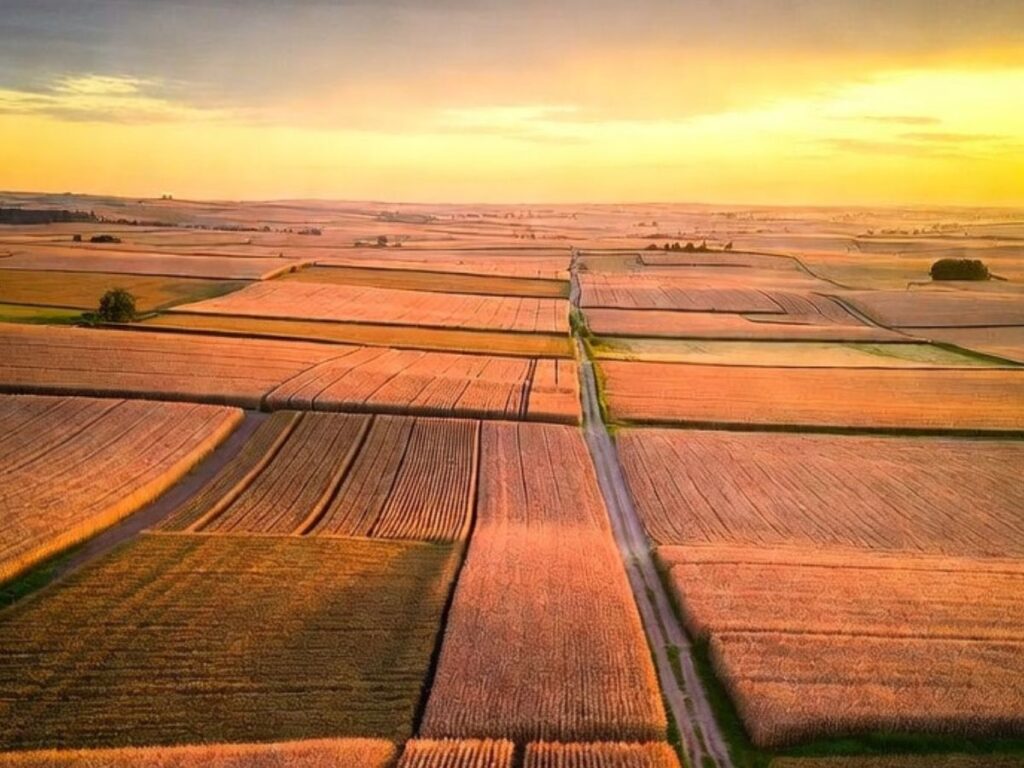
46 million acres.
That is the number in the USDA’s latest Foreign Agricultural Investment Disclosure Act (AFIDA) annual report, covering holdings through December 31, 2024. Forty-six million acres of American agricultural land — 3.6% of all privately held farmland in the country — is now in foreign hands. For context, that is larger than the entire state of Missouri.
And the federal government just admitted it cannot fully keep track of it.
The Government’s Own Admission
In 2024, the Government Accountability Office released a report with a damning finding: current federal systems for tracking foreign agricultural land purchases and assessing national security risks are inadequate. The agencies responsible do not share data effectively, reporting requirements have gaps, and the overall picture of who owns what is incomplete.
“Enhancing efforts to collect, track, and share key information could better identify national security risks.” — U.S. Government Accountability Office, GAO-24-106337
That is the government’s own language. Not a think tank. Not a political commentator. The GAO.
The USDA does maintain an interactive map of foreign-owned agricultural lands in the United States, which shows the geographic concentration of these holdings. But if the tracking systems behind that map are inadequate for national security purposes, the map itself only tells part of the story.
Who Actually Owns It
The American Farm Bureau Federation’s analysis of foreign land ownership trends shows the breakdown more clearly than most news coverage does:
- Canada leads by a wide margin, holding 33.5% of all foreign-owned U.S. agricultural land — approximately 15.35 million acres
- Netherlands — roughly 5.2 million acres
- Italy — approximately 2.7 million acres
- United Kingdom — around 2.6 million acres
- Germany — approximately 2.5 million acres
- China — approximately 248,000 acres
Canada’s dominance in these numbers surprises most people who expected China to top the list. The China figure is smaller in raw acreage — but it is the one that has drawn the most legislative action, and for reasons that go beyond the numbers.
Why China’s 248,000 Acres Punches Above Its Weight
The concern over Chinese-owned farmland is not primarily about total acreage. It is about where it is and who controls the entities making the purchases.
Chinese investors have strategically acquired land near U.S. military bases, sensitive infrastructure, and key agricultural production corridors. A purchase near Grand Forks Air Force Base in North Dakota — by a company linked to a Chinese billionaire — became a national security flashpoint in 2022 and led directly to new federal scrutiny of these deals.
Congressional lawmakers have sought an outright crackdown on Chinese farmland purchases, with multiple bills introduced to expand CFIUS review authority over acquisitions by adversarial nations. Senator Pete Ricketts (R-NE) has been among the most vocal, writing that allowing Chinese Communist Party-linked entities to purchase American farmland is a direct national security threat.
The political dynamics became more complicated in 2026 when, according to a report from Time Magazine, the Trump administration signaled a softer stance on Chinese farmland ownership as part of broader trade negotiations — a reversal that drew immediate backlash from agricultural and national security hawks in his own base.
The Renewable Energy Angle Nobody Is Talking About
Here is the part of the story that gets buried: the fastest-growing driver of foreign agricultural land acquisition in the United States is not food production. It is energy.
Between 2022 and 2023, foreign-held agricultural land increased by 1.58 million acres — and much of that growth was driven by investments tied to solar farms, wind installations, and transmission infrastructure being built on American agricultural land. Foreign investors financing those energy projects are acquiring the ground beneath them.
This creates an entirely different kind of food security risk. It is not just about a foreign government potentially controlling food production. It is about productive American farmland being permanently converted away from agriculture — removed from the food supply base — by investors whose primary interest is energy returns, not what grows from the soil.
According to the Farm Bureau’s latest tracking of foreign investment figures, this energy-driven acquisition trend shows no signs of slowing.
What the Law Currently Allows — and What Is Changing
The primary federal reporting mechanism is AFIDA — the Agricultural Foreign Investment Disclosure Act — which requires foreign persons who acquire or hold an interest in U.S. agricultural land to report those transactions to the USDA. But AFIDA is a disclosure law. It does not prohibit purchases. It just requires them to be reported.
The National Agricultural Law Center maintains a comprehensive resource library on the current state of federal and state laws governing foreign agricultural land ownership — and the picture it shows is a patchwork. Some states have moved aggressively; others have done nothing.
More than 20 states now have some form of restriction on foreign ownership of agricultural land, ranging from outright prohibitions for entities from adversarial nations to enhanced disclosure requirements. At the federal level, bills to strengthen CFIUS review and close the reporting gaps identified by the GAO remain under active consideration but have not yet passed.
What This Means for the People Who Work the Land
For the ranchers, farmers, and rural families whose livelihoods depend on productive American soil, the 46-million-acre figure is not an abstraction. It represents direct competition for land in markets where young farmers are already priced out. It represents uncertainty about who controls critical pieces of the food supply chain in a geopolitical crisis. And it represents a quiet, incremental transfer of something generations of American families built — acre by acre, deed by deed.
The USDA map exists. The GAO report exists. The data exists. Congress has been told exactly what needs to be fixed.
The question is whether Washington moves fast enough to matter.
In the meantime: 46 million acres. And counting.
Recommended
Support American Farmers and Ranchers — Eat Beef T-Shirt
Simple. Direct. Wears well. American farmers and ranchers built this country’s food supply. This shirt says you know it.