
The Colorado River supplies water to 40 million people across seven states, 30 federally recognized tribal nations, and the nation of Mexico. It is the water source behind billions of dollars of agricultural production — beef, crops, hay, grain — across the driest and most productive ranching country in America. The rules that have governed how that water is divided were written in 2007 as emergency drought measures.
Those rules expire this fall.
Seven states were given a federal deadline of February 14, 2026 to present the Bureau of Reclamation with a unified agreement on what happens next. They missed it. That was the second consecutive federal deadline they had failed to meet. The Bureau of Reclamation has now made its position clear: if the states cannot agree, the federal government will impose its own management framework on the river by the end of this summer — whether the states, the tribes, or the ranchers who depend on it are ready or not.
This is not a future problem. It is a right-now problem. And the people feeling it first are the ones feeding the country.
⚡ QUICK TAKEAWAY
- The rules governing the Colorado River since 2007 expire this fall.
- Seven states have now missed two consecutive federal deadlines to reach a new agreement.
- If no deal is reached, the federal government takes control of how the water is divided.
- One tribal farm in Colorado already expects to receive less than 14% of its normal water supply this year.
- Arizona faces potential cuts of up to 77% of its Colorado River share under some federal proposals.
- Ranchers across four states are fallowing fields and cutting herds right now.
What This Looks Like on the Ground
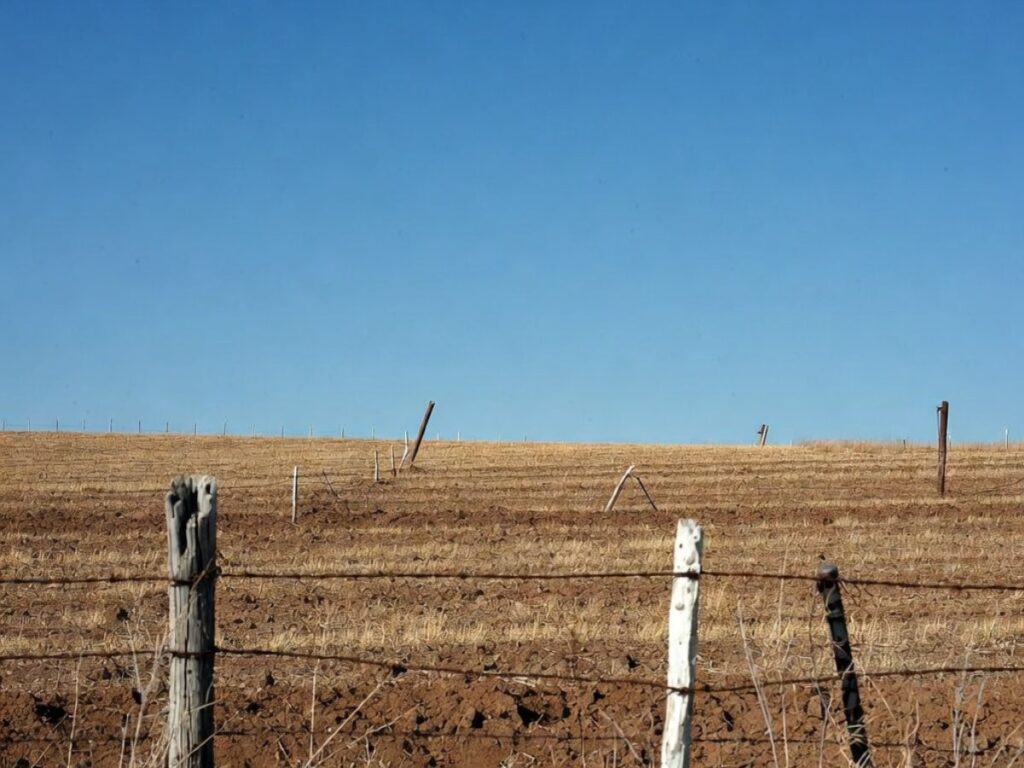
The Ute Mountain Ute Farm and Ranch Enterprise is a 7,700-acre agricultural operation in southwestern Colorado — one of the most productive tribal farms in the country, growing corn, beans, and melons on land the tribe has farmed for generations. In 2026, the farm expects to receive less than 14% of its normal water supply. The result: more than 6,000 acres fallowed. Approximately 900 fields sitting empty. Both tribal and non-tribal employees laid off.
This happened because of a water rights subordination deal made decades ago — the tribe traded senior rights to Mancos River water for junior rights to water from the McPhee Reservoir. When droughts hit, junior rights get cut first. And in 2026, they are nearly gone.

The Ute Mountain Ute situation is not unique. It is a preview.
Arizona is already receiving 18% less of its full Colorado River allocation in 2026 under current operating rules. Nevada is down 7%. California — which holds the most senior water rights in the basin — faces no mandatory cuts. Ranchers in Utah’s Uintah Basin have been forced to reduce cattle herd sizes, raising production costs and straining local economies. Farmers and ranchers across Colorado are fallowing fields, laying off workers, and in some cases going out of business entirely.
“They cull their herds, fallow their fields, lay off workers and go out of business.” — Water Education Colorado, describing decisions ranchers are being forced to make right now
The Deadlock Nobody Can Break
The central fight is between the upper basin states — Colorado, Utah, Wyoming, and New Mexico — and the lower basin states — Arizona, California, and Nevada. The two sides are deadlocked over a single question: who takes the cuts?
Lower basin states want mandatory, shared water reductions during dry years built into the new framework for all seven states. Upper basin states argue the lower basin has chronically overused its allocation for decades and should bear more of the reduction. California — protected by seniority — has little incentive to negotiate away its position.

Meanwhile, Arizona faces projections of up to a 77% cut in its share of Colorado River water under some federal framework scenarios — a number that would be devastating to the state’s agricultural economy and the ranching communities that depend on it.
The Bureau of Reclamation’s official post-2026 operations page shows where the federal process now stands. A final Environmental Impact Statement is set for mid-summer 2026. A Record of Decision follows. New guidelines must be in place by October 1. Acting Commissioner Scott Cameron has been direct: if the states don’t deliver a joint agreement, Washington decides.
The “Buy and Dry” Problem Running Underneath All of It
There is a second crisis unfolding alongside the negotiations — one with consequences that will outlast any agreement reached this summer.
As cities and municipalities across the West face their own water shortfalls, they are purchasing agricultural water rights from farms and ranches. This practice — called “buy and dry” — transfers water from food production to urban and suburban use. The farmland loses its water source. The fields go dry. And in most cases, that land does not return to agricultural production.
Across the western United States, 86% of all water goes to agriculture — with alfalfa alone accounting for 32% of all western water consumption. As those rights get bought, sold, and permanently transferred to municipal users, the productive agricultural base of the West quietly shrinks. The ranchers who remain face higher land costs, reduced water security, and a land market increasingly driven by energy, development, and amenity buyers rather than people who intend to raise food on it.
What the Deadline Actually Means
The new operating guidelines for the Colorado River must be in place by October 1, 2026. The decisions made this summer — in federal offices, state capitols, and tribal council chambers — will determine how water flows through the West, and to whom, for at least the next decade. The Bureau of Reclamation has said the framework will be revisited every two years, but the first set of decisions will lock in assumptions about scarcity, allocation priority, and who absorbs cuts during drought cycles.
Those assumptions will define what is possible on western ranches and farms for a generation.
For the ranchers in Utah already selling off cattle they can no longer water. For the Ute Mountain Ute workers standing in fallowed fields that should be producing crops. For the farmers in Arizona watching their allocation numbers shrink. This summer is not an abstraction.
The deadline is here. The water is running out. And the people who will feel it most are the ones who have been working this land the longest.








I agree that with the lack of runoff of snow and the ongoing drought, people have to cutback from their draws on the Colorado River. Everyone – including California. That said, your math ain’t mathin’. 14% of 7700 acres is 1078 acres. But somehow taking 14% of their water shuts down 6000 acres of agriculture?
I think you may have read the statement wrong. They will receive 14% of their usual supply, a reduction of 86%, not 14%, which will affect 6000+ acres.