Something America Thought It Had Beaten Forever Just Came Back
In 1966, the United States accomplished something remarkable in agricultural history. Scientists and federal agencies, working together over decades, eliminated the New World Screwworm from American soil entirely — eradicating a parasite that had been killing livestock across the country for generations. It was one of the most successful pest-eradication campaigns ever executed, and for 60 years, it held.
That streak ended in 2026.
A calf in La Pryor, Texas — a small town roughly 50 miles from the U.S.-Mexico border — became the first confirmed U.S. case of New World Screwworm in decades. The detection, confirmed by the USDA Animal and Plant Health Inspection Service, set off a federal response unlike anything seen in American agriculture in a generation. Within weeks, Texas Governor Greg Abbott declared a state of disaster. The federal government committed over million in combined funding. And scientists began racing to deploy the same biological weapon that worked the first time — with a population of sterile flies measured in the hundreds of millions per week.
This is the story of what the New World Screwworm actually is, how America beat it once before, how it came back, and what’s at stake if this fight goes the wrong way.
What the New World Screwworm Actually Does
The name alone suggests something unpleasant. The reality is worse.
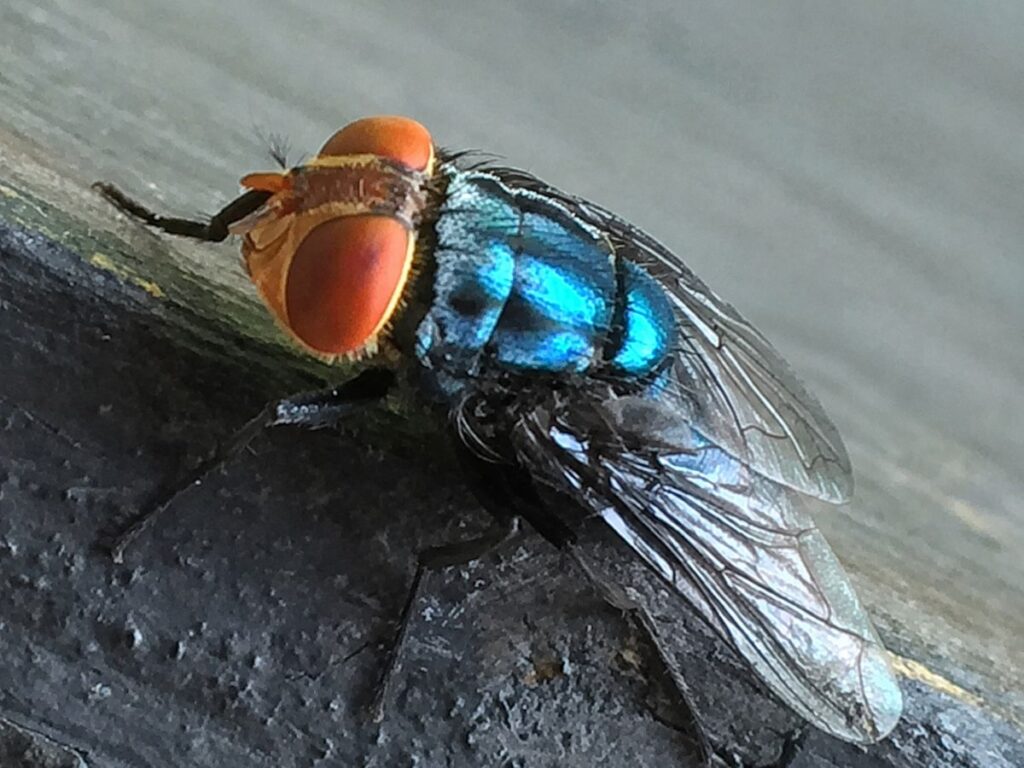
The New World Screwworm is a fly — Cochliomyia hominivorax, which translates from Latin as roughly “man-eater.” The adult fly is unremarkable in appearance, similar to a common green bottlefly. But its larvae are uniquely destructive: unlike most fly larvae, which feed on dead or decaying tissue, screwworm maggots feed exclusively on living flesh.

The Infestation Process
When a female screwworm fly detects an open wound — a cut, a tick bite, a brand mark, even a navel on a newborn animal — she lays her eggs directly in or near the wound. The eggs hatch rapidly. The larvae burrow inward, feeding on healthy tissue and bodily fluid as they grow. As they feed, the wound enlarges, attracting more flies, which lay more eggs. Left untreated, the infestation can consume tissue at a rate that kills a large animal within days.
According to PBS NewsHour, the fly is not limited to livestock. Since the screwworm’s resurgence in Central America and Mexico, approximately 2,000 people have been sickened and 10 deaths have been reported across the region. Any warm-blooded animal with an open wound is vulnerable — cattle, deer, dogs, horses, humans.
Twelve approved treatments exist for infested animals, and early detection dramatically improves survival odds. But the challenge is scale: across millions of acres of ranch land, a single missed animal can seed a new outbreak.
How America Won the First Time
To understand what the U.S. is now trying to do, it helps to understand the original eradication campaign — because the strategy it pioneered is, six decades later, still the primary weapon being deployed.

The Sterile Insect Technique
In the 1950s, USDA entomologist Edward Knipling developed a theory that seemed, at the time, almost absurdly simple: if you could flood the screwworm’s natural mating population with sterile males, females that mated with those males would produce no offspring. Do this long enough, over a wide enough area, and the wild population would collapse.
The key was a biological quirk: female screwworm flies mate only once in their lifetime. As PBS NewsHour described it: “if their one mating hookup is with a sterile male, no eggs from that female will hatch.” Release enough sterile males into the population, and the math becomes irreversible.
The USDA began mass-producing sterile screwworm flies using radiation and releasing them by aircraft across infested regions. The campaign required years and enormous logistical coordination, but it worked. By 1966, the last Texas case was recorded. By the 1980s, the barrier had been pushed south through Central America and eventually held at the Darien Gap in Panama through a permanent sterile fly release program maintained by the USDA and the government of Panama.
The Darien program is one of the longest-running biological pest control operations in history — and it held for decades.
How It Came Back
The screwworm’s return did not happen suddenly. It unfolded in stages, beginning with a breakdown in the Panama barrier.
In 2023, an outbreak was declared in Panama, signaling that the containment line had been breached. By late 2024, confirmed cases had reached southern Mexico. Through 2025, the infestation moved steadily north — through Guatemala, Belize, Honduras, El Salvador, Nicaragua, Costa Rica, Mexico’s southern states, and eventually toward the U.S. border.
According to the American Farm Bureau Federation, by June 2026, Mexico’s national agricultural health agency had confirmed 1,921 active cases — with 50 of those cases within 100 miles of the U.S. border. The USDA responded by shifting its sterile fly dispersal operations northward, extending releases approximately 50 miles into Texas along the border with the Mexican state of Tamaulipas.
It wasn’t enough to prevent the first crossing. In June 2026, a calf in Maverick County, Texas tested positive. The United States had its first confirmed domestic case in roughly 60 years.
The Federal Response — Million and a Race Against Time
The scale of the government’s response reflects the scale of the potential damage.
The Million Research Push
On June 18, 2026, the USDA announced million in funding for 40 “Breakthrough” projects under the New World Screwworm Grand Challenge, which launched in January 2026. The agency received 226 applications requesting a combined million — selecting the 40 projects deemed most likely to have immediate, measurable impact. Research priorities include:
- Enhanced sterile fly production methods that don’t rely on traditional radiation
- New traps and lures for faster, more accurate field detection
- Novel treatments and therapeutics to reduce livestock mortality
- Repellents, ecological modeling, and wildlife surveillance tools
- Rapid-response preparedness infrastructure
“We have beaten this pest before, and by leveraging innovative solutions and advancements in technology we will beat it again in record time.” — Agriculture Secretary Brooke Rollins
The Million Facility in Texas
The longer-term centerpiece of the response is a million sterile fly production facility being built at Moore Air Force Base in Edinburg, Texas — announced jointly by Governor Abbott and Secretary Rollins. When operational, the facility will produce 300 million sterile screwworm flies per week, tripling current production capacity. It is expected to become operational by late 2027.
The USDA is currently dispersing 100 million sterile flies per week along the border. The Edinburg facility would multiply that capacity threefold.
What’s Actually at Stake
The economic argument for aggressive action is straightforward. According to USDA estimates, a 1976 screwworm outbreak in Texas caused million in livestock losses — equivalent to approximately .8 billion in today’s dollars. APHIS has estimated that its ongoing sterile fly program saves the U.S. cattle industry .3 billion annually.
Texas alone represents billion of the nation’s billion cattle industry. A sustained screwworm outbreak in Texas would not stay in Texas — it would ripple through beef supply chains, drive up processing costs, and hit grocery store prices at a moment when beef is already at record highs.
Beyond economics, the screwworm threatens wildlife populations that have no natural defenses against an infestation they haven’t encountered in six decades. Deer, elk, and other warm-blooded wildlife are equally vulnerable and far harder to monitor and treat than managed livestock.
As the American Veterinary Medical Association noted in its coverage of the advancing threat, the combination of a disrupted Panama barrier, rapid northward spread, and first confirmed U.S. cattle cases represents a convergence of risk factors that the agricultural community hasn’t faced in two generations.
The Same Fight, Sixty Years Later
America beat the New World Screwworm once using one of the most creative biological strategies ever deployed in agriculture. The science still works. The sterile insect technique is still the most effective tool available. The question now is whether the infrastructure, funding, and response speed can be scaled fast enough to prevent an outbreak from gaining the kind of foothold that takes years to unwind.
The million in research funding, the million Texas facility, the 100 million sterile flies released per week — all of it points to a federal government that understands what’s coming and is moving to meet it.
Whether it’s moving fast enough is a question that ranchers along the Texas border are watching very carefully.