A Number That Deserves More Attention
Twenty thousand. That is how many American horses were loaded into trailers, driven to the U.S.-Mexico or U.S.-Canada border, and delivered to slaughterhouses in 2024. Not wild horses. Not sick horses. Horses that passed through local livestock auctions in towns across the country.
The debate around horse slaughter in the United States is louder than ever and more divided than almost any agricultural issue in recent memory. On one side: the 83% of Americans who support a national ban, the animal welfare organizations documenting conditions at the border, and the bipartisan lawmakers who have been trying to pass the SAFE Act for over a decade. On the other: ranchers, farmers, livestock auction operators, and working horse owners who say a ban – without a funded alternative – would create a different kind of suffering that the public never has to see.
Both sides are making real arguments. Neither is making them loudly enough for Congress to act.
How the Pipeline Actually Works
There are no horse slaughterhouses currently operating in the United States. What exists instead is a system that moves horses to the border and hands them off to facilities operating under different laws.

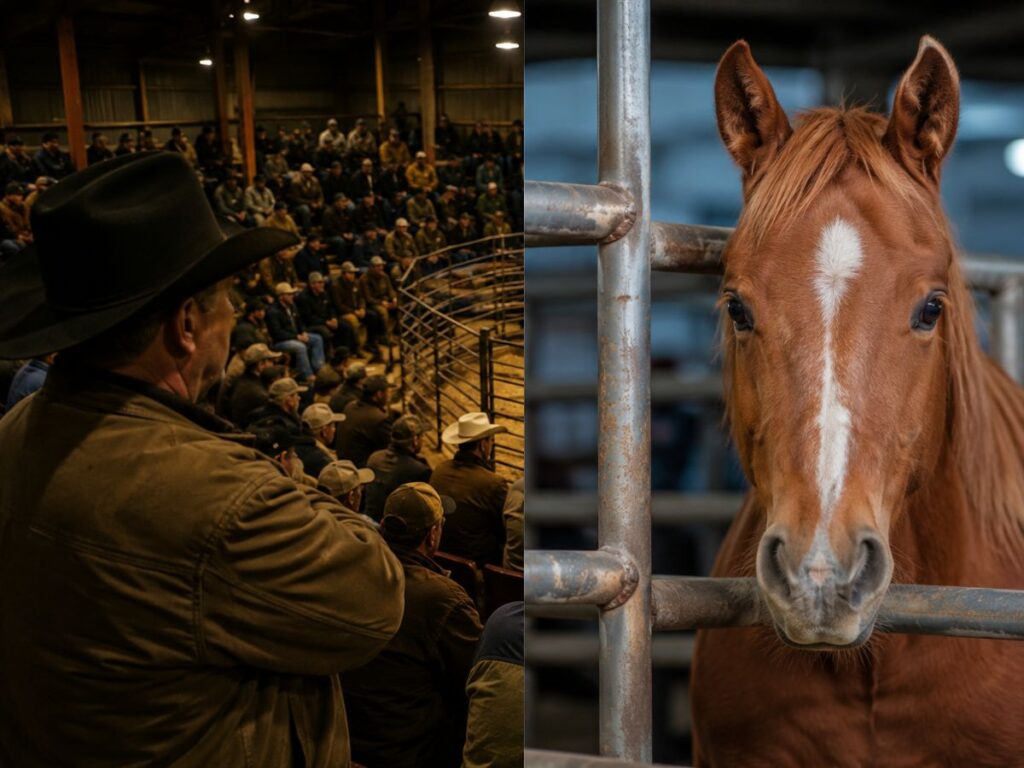
It starts at livestock auctions – the same kind held weekly in counties across the country, where cattle, hogs, and horses change hands. At these auctions, a category of buyers known as “kill buyers” attend regularly. They purchase horses cheaply, load them into trailers, and transport them to slaughter facilities in other countries such as Mexico. The horses are bought by the pound – meaning a heavier, healthier horse is more valuable to a kill buyer than a small or thin one.
The journey itself is one of the most documented welfare concerns in the entire process. Horses are transported in conditions that can exceed 28 hours without food, water, or rest. They are often loaded with unfamiliar animals, which causes stress, fighting, and injury. Once they cross the border, U.S. federal law has no jurisdiction over what happens next.

According to Animals Angels, an organization that tracks the slaughter industry, conditions during transport and at destination facilities regularly fall below what U.S. humane slaughter standards would require – standards that were precisely the reason domestic horse slaughterhouses were effectively shut down.
The Case for Keeping It
Here is the argument that rarely gets covered in mainstream discussions of horse slaughter – and it comes from people with direct experience in the working horse world.
The unwanted horse problem is real and underfunded. The United States has no coordinated national system for managing surplus or unwanted equines. Horse rescues are full. Adoption demand does not come close to meeting the number of horses that need homes each year. When horses age out of usefulness, sustain career-ending injuries, or simply outlive their owners’ ability to care for them, something has to happen.
Professional veterinary euthanasia – the humane alternative most people default to when they think about this – costs between $250 and $600 for the procedure alone. Carcass disposal adds another $200 to $600. For a working ranch family managing multiple horses, that is a significant and recurring cost. For an elderly horse owner on a fixed income, it may be genuinely out of reach.
The kill buyer, in that context, functions as a free disposal service. The horse leaves the property. The owner does not pay. The auction clears the animal.
“To auction house owners and ranchers, those opposed to slaughter are meddling idealists who, if they succeed in their goal of banning slaughter, will increase the suffering of old and infirm horses by pushing cash-strapped owners to abandon their animals.” – Farm Progress
This is not a fringe position. It has been the central argument of livestock industry groups opposing the SAFE Act for over twenty years, and it has been enough – combined with agricultural lobbying – to keep that bill stalled in committee every single time it has been introduced.
What Happened When the Slaughterhouses Closed
This is the data point that the anti-slaughter movement has the hardest time answering. When the last U.S. horse slaughterhouses closed in 2007 – not through a ban, but through defunding of USDA inspection – the results were not a straightforward welfare improvement.
According to Farm Progress, horse abandonment and neglect cases increased significantly in the years that followed, particularly in border states. Rescue organizations reported being overwhelmed. Horse values at the low end of the market collapsed, partly because kill buyers – who function as a price floor at auction – were no longer present in the same numbers.
The argument is straightforward: remove the last-resort buyer, and you do not eliminate the problem horses. You just eliminate the outlet for them.
The Case Against
The counter-arguments are equally grounded in documented reality.
Most horses in kill pens are not unwanted wrecks. Rescue organizations that monitor livestock auctions consistently report that the horses entering the slaughter pipeline are predominantly young, healthy, and adoptable – not old, broken-down animals with no alternative. The “unwanted horse” framing, they argue, does not match what actually shows up in the kill pen.
The drug contamination problem is serious. American horses are not raised as food animals. They receive medications throughout their lives – including phenylbutazone, ivermectin, and various steroids – that are explicitly prohibited from the human food chain in the European Union and other importing countries. These drugs do not clear the system on any defined timeline. The horses being slaughtered in Mexico and whose meat is exported to Belgium, the Netherlands, Switzerland, and Japan are carrying chemical residues that those countries’ food safety systems assume are not present.
The transport conditions cause documented suffering. The journey to the border is not humane by any reasonable standard. Animals that are injured, stressed, or ill during transport have no federal protection once they cross state lines headed for export. The suffering is real and well-documented.
The Horses That Get Caught in the Middle
Here is where the debate becomes most difficult. The horses most at risk in the current system are not the ones that belong to negligent owners or struggling ranches. They are horses that pass through the ownership chain – sold, resold, and eventually reaching someone who can no longer care for them and sees an auction as the fastest exit.
Many people who sell horses at livestock auctions do not know kill buyers are present. They believe their horse is going to a new home, a working situation, or a feedlot. Kill buyers are not required to disclose their intentions, and auction houses are not required to ask.
The SAFE Act – the Safeguard American Food Exports Act, reintroduced in 2025 with over 100 bipartisan cosponsors – would permanently ban the transport of horses across U.S. borders for slaughter. It would not address euthanasia costs. It would not fund a national rescue infrastructure. It would close the export pipeline and leave the unwanted horse problem for states, rescues, and individual owners to manage without new resources.
That gap is exactly why the bill keeps stalling.
The Question That Remains Unanswered
Twenty thousand horses a year is not an abstraction. Each one passed through a human transaction – a sale, a decision, a trailer ride – before the end. Some were sold knowingly into the pipeline. Many were not.

The debate about whether that pipeline should exist is legitimate on both sides. What is not legitimate is the current situation: a system that operates in a regulatory gray zone, ships animals across borders to avoid U.S. humane standards, exposes foreign consumers to drug-contaminated meat, and leaves the underlying problem of unwanted horses entirely unaddressed.
Banning slaughter without funding alternatives creates one kind of suffering. The current system creates another. The only honest answer is that neither outcome – ban or status quo – is acceptable as a final position. What is missing is the political will to build something better.